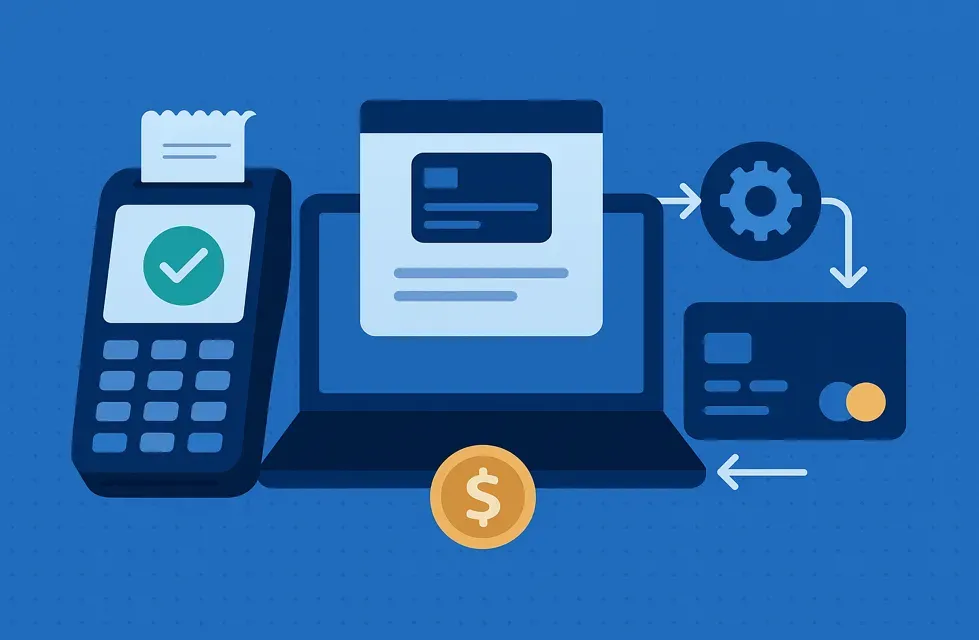
Selling digital books online sounds simple — upload files, set prices, collect payments. But the moment you start selling across borders, the complexity multiplies fast. Tax obligations, currency mismatches, local payment preferences, and compliance requirements can turn what should be a straightforward transaction into an operational nightmare. This guide breaks down exactly what bookshop owners need to understand about payment processing for digital goods — and how to build a system that works globally without requiring a finance degree.
Why Digital Bookshops Face Unique Payment Challenges
Physical goods are complicated enough. Digital goods add a layer of regulatory complexity that catches many bookshop owners off guard. When a reader in São Paulo buys an ebook from your storefront, you're not just completing a sale — you're potentially triggering VAT obligations in Brazil, currency conversion, local payment processing requirements, and consumer protection rules specific to digital goods.
Unlike a physical book sale, digital transactions happen instantly and cross borders invisibly. A small independent bookshop in Buenos Aires can now sell to readers in Mexico City, Bogotá, and Madrid in the same afternoon. That's an enormous opportunity — but without the right infrastructure, it's also significant financial and legal exposure.
The good news: most of this complexity can be abstracted away by the right platform. But first, you need to understand what you're dealing with.
Taxes on Digital Goods: What Bookshops Actually Owe
Tax rules for digital goods vary significantly by country — and many jurisdictions have updated their rules specifically to capture revenue from cross-border digital sales. Staying compliant means understanding the rules in your key markets.
EU VAT on Digital Products
If you sell ebooks to readers in European Union countries, you're required to charge VAT at the rate applicable in the buyer's country — not your own. This is the destination principle, established under the EU's 2015 and 2021 VAT reforms. An ebook sold to a reader in Germany is subject to German VAT (currently 7% for books), while the same sale to a French reader triggers French VAT (5.5% for ebooks). The EU's One Stop Shop (OSS) scheme simplifies registration — you can register in a single EU member state and file consolidated returns — but you still need to track buyer locations and apply the right rates.
For non-EU bookshops, the threshold that triggers registration obligations has been eliminated for digital services: if you make even a single B2C digital sale into the EU, VAT rules apply. Many small bookshops are unknowingly non-compliant here.
LATAM Tax Rules for Digital Sales
Latin America has moved aggressively to tax digital goods and services. Brazil requires foreign digital service providers to register with Receita Federal and collect PIS/COFINS and ISS at rates that vary by municipality. Mexico applies 16% IVA to digital services sold to Mexican residents. Colombia, Argentina, Chile, and Peru all have their own frameworks — and most require either local registration or withholding by the payment processor.
The practical challenge: many of these obligations depend on correctly identifying where your buyer is located, which requires proper IP detection, billing address validation, and sometimes additional verification. Getting this wrong exposes you to back taxes and penalties.
The Safe Harbor: Platform-Level Tax Handling
The most practical solution for most bookshop operators isn't to build in-house tax compliance infrastructure — it's to use a platform that handles tax calculation, collection, and remittance as part of the payment flow. This is precisely the model that modern digital publishing platforms like Publica.la's bookshop solution are built around: compliance handled at the platform level so you can focus on your catalog and your readers.
Multi-Currency Pricing: More Than Just Exchange Rates
Displaying prices in local currencies isn't just a nice-to-have — it's a conversion driver. Studies consistently show that checkout abandonment spikes when buyers encounter unfamiliar currencies or unexpected conversion costs. For digital bookshops targeting LATAM, pricing in local currencies is essentially table stakes.
Static vs. Dynamic Currency Pricing
You have two main approaches. Static pricing means you set specific prices in each currency — $9.99 USD, R$49.90 BRL, $8.990 CLP — and update them periodically as exchange rates shift. This gives you control over margin and simplifies local marketing, but requires active management. Dynamic pricing converts a base price automatically using live or near-live exchange rates. It's lower maintenance but can create awkward price points (R$47.83 BRL doesn't look intentional) and margin volatility.
Most experienced operators use a hybrid: defined price points in key markets, with automatic conversion as a fallback for secondary markets. The key is ensuring your payment processor actually settles in the currencies you're selling in — not just displaying them at checkout and then converting to USD on the backend.
Currency Risk and Settlement
When you sell in Brazilian Reais but settle in US dollars, you're exposed to currency risk on every transaction. For high-volume sellers in volatile markets, this can meaningfully affect revenue. Some platforms offer multi-currency settlement — holding balances in BRL, MXN, or COP and transferring them on your schedule. This adds operational complexity but protects margin in markets with significant currency movements.
Payment Methods: Local Matters More Than You Think
Credit cards dominate in North America and Europe, but LATAM is a different story. The most important insight for any bookshop targeting Latin American readers: if you only accept Visa and Mastercard, you're leaving a significant share of potential sales on the table.
Key Local Payment Methods by Market
Brazil: PIX is now the dominant instant payment method in Brazil, with over 150 million registered keys as of 2024. Boleto bancário remains important for unbanked and underbanked consumers. Credit card installments (parcelamento) are deeply culturally embedded — many Brazilian consumers won't purchase without an installment option, even for small amounts.
Mexico: OXXO cash vouchers allow consumers to complete online purchases at any of 20,000+ OXXO convenience stores nationwide. This is critical for reaching Mexico's large unbanked population. SPEI bank transfers and Mercado Pago also carry significant volume.
Argentina: MercadoPago is the dominant payment ecosystem, with its own digital wallet, card processing, and installment infrastructure. Rapipago and Pagofácil handle cash payments. Argentinian consumers also rely heavily on debit cards and local credit installment plans.
Colombia, Chile, Peru: PSE (Colombia), Khipu (Chile), and PagoEfectivo (Peru) are local bank transfer systems with significant adoption. Ignoring these in favor of card-only processing meaningfully limits your addressable market.
Integrating Local Methods Without the Complexity
The challenge for independent bookshops is that integrating each of these methods directly requires separate agreements, compliance work, and technical integration with each payment provider. The practical solution is a payment platform with pre-built integrations across LATAM's key methods — so a single integration gives you PIX, OXXO, MercadoPago, and card processing without managing each relationship individually.
PCI Compliance for Bookshops
If your storefront handles card data — even just cardholder names and numbers — you're subject to PCI DSS (Payment Card Industry Data Security Standard). For most small and mid-sized digital bookshops, the goal should be to minimize your compliance scope, not just meet it.
Reducing Your Compliance Burden
The most effective way to simplify PCI compliance is to never handle raw card data yourself. Hosted payment pages, iframes, and JavaScript-based tokenization (Stripe Elements, Braintree Drop-in, etc.) mean that card data goes directly from the reader's browser to the payment processor — your servers never see it. This moves you into the simplest PCI compliance tier (SAQ A), which requires a relatively brief self-assessment rather than a full audit.
Bookshops that self-host checkout forms and pass card data through their own servers face significantly more onerous compliance requirements. Unless you have dedicated security infrastructure and expertise, this is a risk not worth taking.
Refunds and Chargebacks for Digital Goods
Digital goods present a specific challenge for refund and chargeback management: unlike physical goods, there's no way to "return" a downloaded ebook. This creates both policy complexity and chargeback risk.
Setting Clear Refund Policies
Different jurisdictions have different rules about consumer rights for digital goods. EU regulations allow consumers to waive their 14-day right of withdrawal for digital content — but only if they explicitly consent before the purchase and acknowledge the waiver. Without this, EU buyers can demand refunds regardless of your policy. Brazil's Consumer Protection Code grants similar rights.
Best practice: display your refund policy clearly before checkout, require affirmative consent for digital delivery (e.g., "I understand this is a digital product and agree to immediate delivery"), and maintain clear purchase records in case of disputes.
Managing Chargeback Risk
Chargebacks on digital goods can be costly — not just the transaction value, but potential processor penalties for high chargeback rates. Common triggers include forgotten subscriptions, disputed charges from shared accounts, and fraud. Mitigation strategies include clear billing descriptors (the bookshop name, not a parent company), purchase confirmation emails with delivery details, and easy access to customer service before a buyer escalates to their bank.
Choosing the Right Payment Infrastructure
For bookshop owners, the build-vs-buy decision on payment infrastructure is usually clear: build is not worth it. The engineering, compliance, and ongoing maintenance costs of assembling a custom multi-currency, multi-method, tax-compliant payment stack are prohibitive for all but the largest players.
When evaluating platforms, the questions that matter most are: Does it support the payment methods your target markets actually use? Does it handle tax calculation and remittance, or leave that to you? Can it process and settle in local currencies? What's the chargeback dispute process? And critically — can it grow with you as you expand into new markets?
A purpose-built platform for digital publishing, like the bookshop infrastructure offered by Publica.la, addresses these questions as a package — payment processing, tax handling, local method support, and currency management built for the specific context of selling ebooks, audiobooks, and digital content to readers across Latin America and beyond. If you're considering launching or scaling a digital bookshop, it's worth reading through our complete guide to launching a digital bookshop for a broader operational overview alongside the payment specifics covered here.
The Bottom Line: Complexity Is Manageable
Payment processing for digital bookshops is genuinely complex — but it's a solved problem for operators who choose the right infrastructure. The bookshop owners who succeed at cross-border digital sales aren't necessarily payment experts. They're operators who've made smart platform decisions that abstract the complexity and let them focus on what they're actually good at: curating catalogs, serving readers, and building communities around books.
Get the infrastructure right, and selling ebooks to readers in Buenos Aires, Mexico City, and Lisbon is no harder than selling to readers in your own city. Get it wrong, and every cross-border sale becomes a compliance and operations problem.
If you're ready to build payment infrastructure that scales with your bookshop, schedule a meeting with our team — we'll walk you through how Publica Payments handles the complexity so you don't have to.