
You know exactly how many copies you sold last quarter. What you don't know is why readers stopped on page 47, which chapters they highlighted most, or which titles they finished in a single weekend and immediately recommended to a friend. That gap — between sales data and reader behavior data — is costing publishers real money every day.
The good news: it doesn't have to. Publishers who sell directly to readers are sitting on a goldmine of behavioral signals that third-party marketplaces will never share with you. This is the foundation of a smarter, data-driven publishing strategy — and it starts with understanding what zero-party data really means.
The Data Gap That Marketplaces Created
When you distribute through Amazon, Kobo, or Google Play, you receive a monthly sales report. Units sold, revenue per title, maybe a regional breakdown if you're lucky. That's it. The marketplace keeps everything else — which titles readers browsed before buying, how far they got before abandoning, what they searched for, whether they finished the book or dropped off at chapter 3.
This isn't an accident. Marketplace data is a competitive asset for those platforms. They use it to power their own recommendation engines, inform their editorial acquisitions, and build reader profiles they sell to advertisers. You supplied the content. They kept the intelligence.
Publishers who have explored direct-to-consumer ebook sales and why publishers are leaving marketplaces already understand the revenue argument for going D2C. But the data argument is just as compelling — and longer-lasting.
What Zero-Party Data Actually Means for Publishers
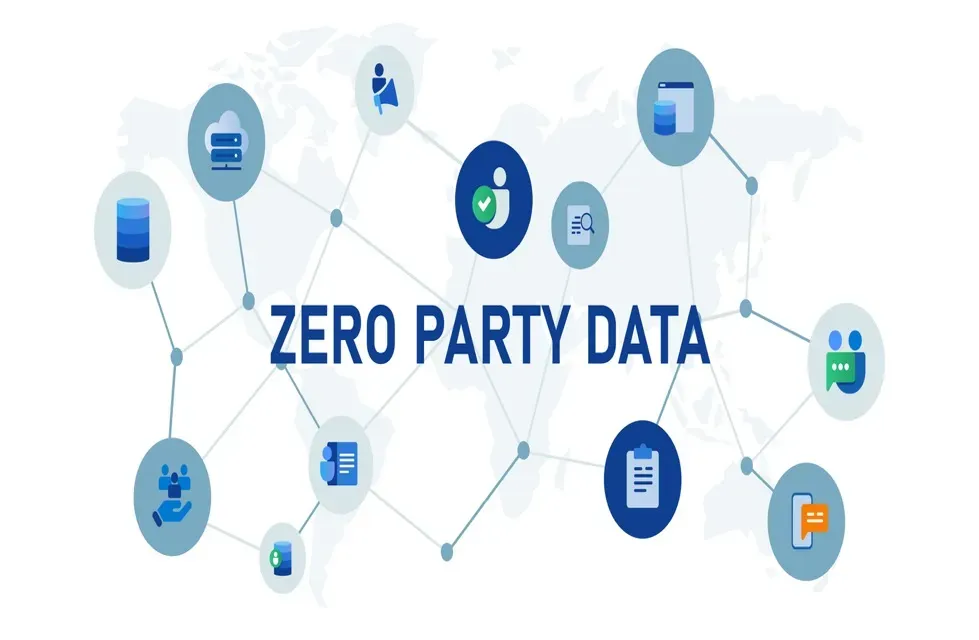
Zero-party data is behavioral information that readers generate through their natural interactions with your platform. It's not data you inferred, purchased, or scraped — it's data readers actively produce by reading, searching, bookmarking, and engaging with your content. When a reader finishes a novel in 3 days, highlights a passage from chapter 12, and then adds another title by the same author to their wishlist, every one of those actions is a data point that belongs to you.
This is fundamentally different from third-party cookies or purchased audience lists. Zero-party data is earned, first-hand, and deeply specific to your catalog. No algorithm can replicate it. No competitor can buy it. It's yours — but only if you own the reading experience.
The shift to a D2C storefront isn't just about keeping more revenue per sale. It's about reclaiming the intelligence your readers generate every time they open one of your books.
The Reader Behavior Signals You're Missing
A direct digital publishing platform can capture a rich set of behavioral data points across every reader session. Here's what that looks like in practice:
- Reading time per session and per title — How long are readers spending? Short sessions may indicate friction; long sessions signal deep engagement.
- Completion rates — The most powerful single metric. A title with a 78% completion rate is performing very differently from one where 60% of readers abandon before the halfway point.
- Read-through velocity — How quickly readers move from purchase to finish. Fast readers often become advocates and series buyers.
- Highlight and annotation patterns — Which passages resonate? Clusters of highlights in the same section tell you something important about what your readers value.
- Search queries on your storefront — What are readers looking for that you may not be offering yet? Search data is one of the most underused acquisition signals in publishing.
- Wishlist behavior — Titles readers save but haven't bought yet reveal price sensitivity, hesitation points, and demand for upcoming releases.
- Device preferences — Readers on mobile behave differently from desktop readers. Format and length decisions can be calibrated accordingly.
- Series read-through rates — If 80% of readers who finish book one immediately start book two, that series warrants a very different marketing investment than one where most readers stop.
Individually, each signal is informative. Together, they form a predictive model for what your readers want next — before they even know it themselves.
From Engagement Data to Best-Seller Predictions
Here's where reader analytics for publishers moves from interesting to actionable. When you combine completion rate, read-through velocity, and annotation density for a given title, you get a composite engagement score that is a remarkably reliable predictor of word-of-mouth performance.
Titles with high completion rates and fast read-through velocity have readers who finish, feel satisfied, and talk. Those are your best-seller candidates — not necessarily the ones with the biggest launch-week sales push, but the ones with the organic momentum that sustains a catalog. If a mid-list title from two years ago is quietly showing 80% completion and accelerating wishlists, that's not a coincidence. That's a signal to invest in a new edition, expand the series, or run a targeted campaign to readers of similar titles.
Conversely, a title with strong initial sales but a 35% completion rate is telling you something you need to hear. Whether it's a positioning mismatch, a pacing problem, or the wrong audience — you now have the data to investigate and act, rather than simply watching it fade.
Practical Applications Across Your Publishing Operation
Once you have ebook engagement data flowing, the applications touch every part of your business:
- Catalog curation — Prioritize titles for marketing investment based on engagement signals, not just sales rank. High-engagement, low-visibility titles are often the biggest opportunity in your catalog.
- Pricing optimization — Wishlist data reveals where price is the barrier. A title sitting in 3,000 wishlists but converting at 12% is asking for a test at a different price point.
- Acquisition decisions — When evaluating new manuscripts or authors, comparable title performance within your own catalog gives you a data-backed baseline. You're not guessing at market fit — you're measuring it.
- Personalized recommendations — Readers who finished a literary thriller in under 4 days should see different recommendations than readers who took 3 weeks with a business book. Behavioral segmentation makes personalization genuinely useful rather than generic.
- Series and author strategy — Series read-through rates are the clearest possible signal for where to focus editorial resources. An author with a 75% series completion rate deserves a multi-book conversation.
The Competitive Advantage of Owning Your Reader Data
Publishers who build their editorial and marketing decisions on reader behavior data develop a compounding advantage over time. Each title you publish generates more data. Each reader interaction refines your understanding of your audience. Over 3 to 5 years, the gap between publishers who own this intelligence and those who remain dependent on marketplace reports becomes very difficult to close.
This is not hypothetical. It's the same dynamic that explains why major streaming platforms became content studios — they had reader (or viewer) behavior data that traditional publishers and studios didn't. The question for independent and mid-size publishers isn't whether this matters. It's whether you'll build this capability before your competitors do.
Publica.la's analytics engine — built on Coniglio, our event-tracking backend — captures and surfaces this behavioral data across every reader interaction on your storefront and reading apps. It's designed specifically for publishing use cases, not generic e-commerce metrics. You get the signals that matter for catalog decisions, not just conversion funnels. To explore the full platform, see how Publica.la supports publishers.
Start Making Editorial Decisions Backed by Reader Behavior
The publishers who will lead their markets in the next decade won't just be the ones with the best content. They'll be the ones who understand their readers most deeply — which titles captivate, which lose momentum, which authors are building audiences that compound. That intelligence is already being generated every time someone opens one of your books. The only question is whether you're capturing it.
If you're ready to move beyond sales reports and start building with real reader analytics for publishers, we'd love to talk through what that looks like for your catalog. Schedule a call and let's explore how your reader data can start driving better publishing decisions.